


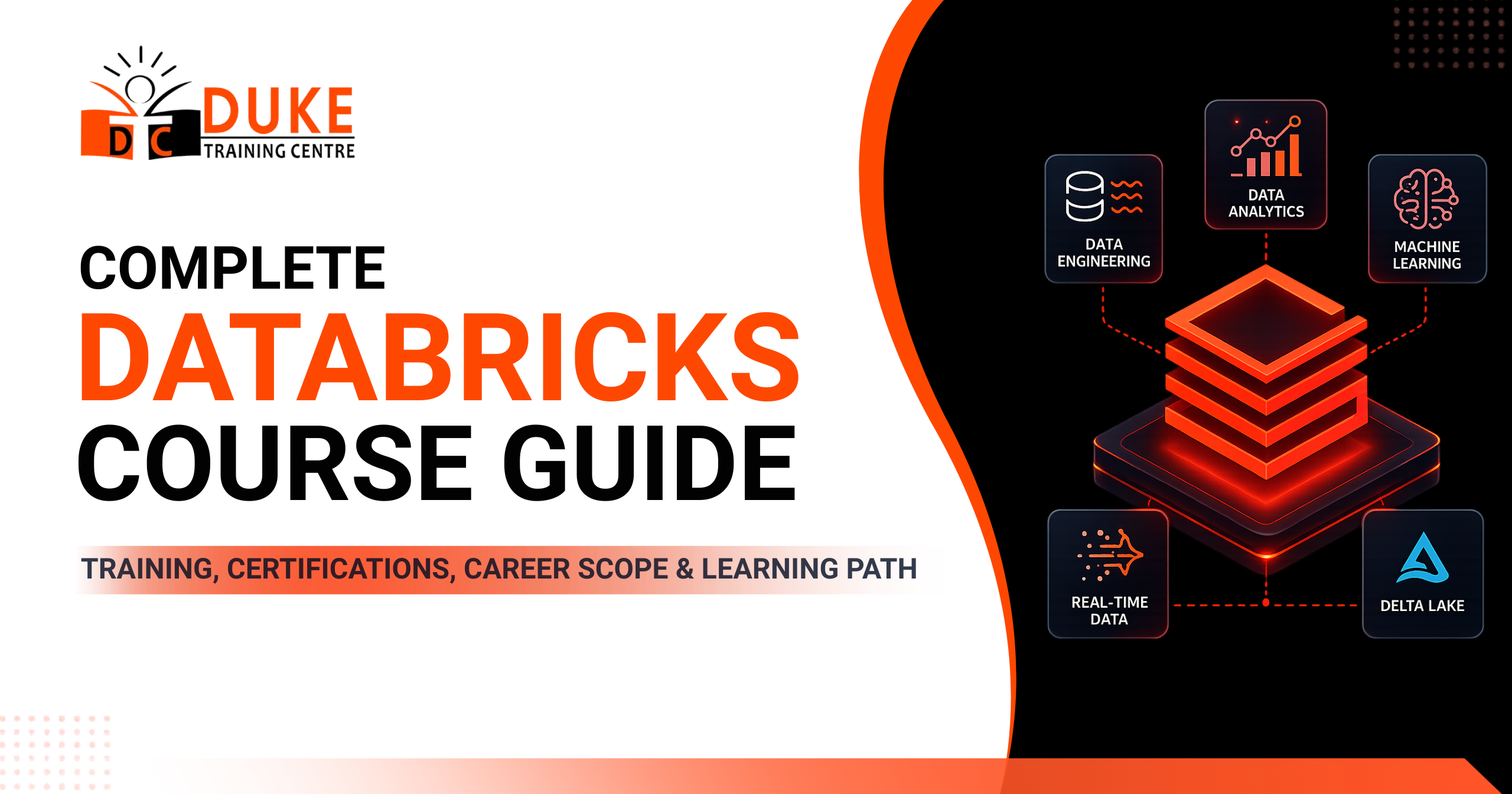
Modern businesses rely heavily on cloud analytics, big data processing, and artificial intelligence to make faster and smarter decisions. As a result, technologies like Databricks have become highly important in the IT and data engineering industry. From startups to multinational enterprises, organizations are actively adopting Databricks for scalable data processing and machine learning workflows.
Because of this growing demand, Databricks training has become one of the most sought-after technology courses for aspiring data engineers, cloud professionals, and analytics experts. Whether you are a beginner or an experienced IT professional, learning Databricks can help you build a strong career in cloud data engineering, AI-driven analytics, and enterprise data management.
In this guide, you will learn about Databricks courses, certifications, career opportunities, skills covered, course duration, and how to choose the best institute for training.
What is Databricks?
Databricks is a cloud-based unified analytics platform built on Apache Spark technology. It allows organizations to process large amounts of structured and unstructured data efficiently while supporting analytics, machine learning, and data engineering workflows from a single platform.
Key Features of Databricks
- Cloud-based data analytics platform
- Supports Apache Spark architecture
- Unified workspace for teams
- Scalable big data processing
- Integrated machine learning tools
- Real-time analytics capabilities
Databricks is commonly integrated with cloud services like Microsoft Azure, AWS, and Google Cloud Platform for enterprise-level analytics solutions.
Why Learn Databricks in 2026?
The demand for cloud analytics and AI-powered data processing is increasing rapidly across industries such as healthcare, banking, e-commerce, telecom, and manufacturing. Companies are actively hiring professionals who can manage cloud data pipelines and large-scale analytics systems.
Major Reasons to Learn Databricks
- High demand for data engineers
- Excellent salary opportunities
- Strong integration with cloud platforms
- Widely used in enterprise analytics
- Growing adoption of AI technologies
- Suitable for beginners and professionals
Learning Databricks can help professionals stay competitive in the modern big data and cloud computing industry.
Types of Databricks Courses
Different Databricks training programs are available based on career goals, technical background, and specialization areas. Learners can choose beginner-level or advanced role-based training according to their experience.
1. Databricks Fundamentals Course
This course provides a beginner-friendly introduction to Databricks and big data concepts.
Topics Covered
- Databricks workspace overview
- Apache Spark basics
- Clusters and notebooks
- DataFrames and SQL
- Introduction to Delta Lake
Course Duration
- 2 to 4 weeks
Suitable For
- Freshers
- Students
- Data analysts
- Beginners in cloud analytics
2. Databricks Data Engineer Course
This is one of the most popular Databricks certification training programs for data engineering roles.
Topics Covered
- ETL pipeline development
- PySpark programming
- Workflow automation
- Data ingestion methods
- Delta Lake implementation
- Performance optimization
Course Duration
- 6 to 12 weeks
Suitable For
- Data engineers
- Software developers
- Cloud professionals
- Database administrators
3. Azure Databricks Training
Azure Databricks training focuses on enterprise cloud analytics using Microsoft Azure infrastructure.
Topics Covered
- Azure Data Factory
- Azure Storage integration
- Cloud data pipelines
- Security and governance
- Real-time analytics
Course Duration
- 6 to 10 weeks
This course is highly beneficial for professionals working in Microsoft cloud environments.
Skills Covered in Databricks Training
A professional Databricks course focuses on both theoretical knowledge and practical implementation. Most training programs include hands-on projects and real-time use cases to help learners gain industry-ready skills.
Important Skills You Learn
- Apache Spark architecture
- PySpark programming
- SQL analytics
- Data transformation
- ETL workflow creation
- Delta Lake management
- Cloud integration techniques
- Machine learning workflows
- Real-time streaming analytics
These technical skills are highly valuable for enterprise data engineering and cloud analytics careers.
Databricks Certifications
Databricks certifications validate your expertise in cloud analytics and data engineering technologies. Certification training helps professionals improve their technical credibility and career opportunities.
Popular Databricks Certifications
- Databricks Certified Data Engineer Associate
- Databricks Certified Professional Data Engineer
- Databricks Machine Learning Associate
Certification Training Includes
- Practice assignments
- Mock tests
- Real-time projects
- Interview preparation
- Exam-focused guidance
Professionals with Databricks certification often gain better opportunities in cloud and big data job roles.
Career Opportunities After Databricks Training
The adoption of big data and cloud technologies has created strong demand for Databricks professionals worldwide. After completing a Databricks course, learners can apply for several high-paying technical positions.
Popular Job Roles
- Data Engineer
- Big Data Developer
- Cloud Data Engineer
- Spark Developer
- Analytics Engineer
- Machine Learning Engineer
- Data Analyst
Many companies prefer professionals with practical knowledge of PySpark, cloud analytics, and scalable data processing systems.
Salary Scope for Databricks Professionals in UAE
The demand for Databricks professionals is growing rapidly across the UAE as companies continue investing in cloud computing, AI-powered analytics, and enterprise data engineering solutions. Industries such as banking, healthcare, retail, logistics, and telecom actively hire certified data engineering professionals.
Professionals with expertise in PySpark, cloud analytics, and Azure Databricks often receive competitive salary packages in the UAE technology market.
Approximate Salary Range in UAE
- Freshers: AED 6,000 – AED 10,000 per month
- Mid-level professionals: AED 12,000 – AED 22,000 per month
- Experienced professionals: AED 25,000+ per month
Factors Affecting Salary Packages
- Databricks certifications
- Cloud platform expertise
- Real-time project experience
- PySpark and SQL skills
- Machine learning knowledge
- Enterprise analytics exposure
Professionals with hands-on experience in Azure Databricks and cloud data engineering are highly preferred by companies across the UAE job market.
Real-Time Projects Included in Databricks Courses
Practical learning plays a major role in mastering Databricks technologies. Most advanced training programs include project-based learning to improve implementation skills.
Common Project Examples
- Customer analytics pipeline
- Sales dashboard ETL workflow
- Real-time streaming analytics
- Cloud data lake implementation
- Predictive analytics solutions
- Business intelligence reporting
These projects help learners understand real-world enterprise analytics environments more effectively.
How to Choose the Best Databricks Training Institute
Choosing the right institute is extremely important for building practical skills and achieving career growth. Before enrolling in any Databricks course online or offline, learners should carefully evaluate the training quality and curriculum structure.
1. Check the Course Curriculum
A quality institute should cover:
- PySpark programming
- Delta Lake
- Cloud integration
- ETL pipelines
- Real-time projects
- Certification preparation
Comprehensive training ensures better industry readiness.
2. Evaluate Trainer Experience
Always choose institutes with industry-experienced trainers who have practical knowledge of:
- Cloud data engineering
- Enterprise analytics
- Big data technologies
- Real-time implementation
Experienced mentors provide practical insights that go beyond theoretical learning.
3. Look for Hands-On Project Training
Practical exposure is essential in modern data engineering courses.
Important Learning Features
- Live projects
- Assignments
- Lab sessions
- Case studies
- Interview preparation
Hands-on training improves technical confidence and problem-solving skills.
4. Check Reviews and Placement Support
Before enrolling, review:
- Student testimonials
- Google reviews
- Placement assistance
- Certification guidance
- Alumni success stories
A reputed institute usually offers strong learning support and career assistance.
Final Thoughts
Databricks has become one of the leading technologies in cloud analytics, data engineering, and AI-powered business solutions. As organizations continue investing in scalable data platforms, the demand for skilled Databricks professionals is expected to grow significantly in the coming years.
A professional Databricks training course can help learners develop expertise in PySpark, cloud analytics, machine learning workflows, and enterprise data engineering. Whether you are a beginner, software developer, or IT professional, learning Databricks can open doors to excellent career opportunities in the rapidly growing big data industry.
Before enrolling, choose a training institute that provides practical learning, real-time projects, certification support, and experienced mentors to maximize your career growth potential.