


Businesses today are under constant pressure to reduce costs, improve quality, save time, and deliver better customer experiences. This is why companies across the UAE are investing in Lean Six Sigma training to improve processes, remove waste, and build more efficient teams.
For students, fresh graduates, and working professionals, Lean Six Sigma certification is a powerful way to learn practical problem-solving, quality management, and process improvement skills. Whether you are from operations, manufacturing, healthcare, logistics, construction, aviation, IT, or finance, Lean Six Sigma can help you build a stronger career foundation.
This beginner-friendly guide explains what Lean Six Sigma is, how its certification levels work, which belt is best for beginners, what skills you learn, and how it can support your career growth in the UAE.
What is Lean Six Sigma?
Lean Six Sigma is a process improvement methodology that helps organizations reduce waste, improve quality, minimize errors, and increase efficiency using data-driven decision-making.
It combines two powerful business improvement approaches:
| Methodology | Main Focus |
|---|---|
| Lean | Reducing waste, delays, and unnecessary steps |
| Six Sigma | Reducing errors, variation, and process defects |
Together, Lean and Six Sigma help businesses improve workflow performance, customer satisfaction, productivity, and operational excellence.
Simple Example
If a company is taking too long to deliver customer orders, Lean Six Sigma can help identify where delays are happening, remove unnecessary steps, reduce mistakes, and improve the overall delivery process.
That is why Lean Six Sigma is widely used in industries such as manufacturing, healthcare, logistics, aviation, construction, banking, oil and gas, and IT services.
Why Should Beginners Learn Lean Six Sigma?
Beginners should learn Lean Six Sigma because it teaches practical skills that are useful in almost every industry. Every organization wants to improve efficiency, reduce mistakes, control costs, and deliver better results. Lean Six Sigma helps professionals understand how to solve business problems in a structured way.
For freshers and early-career professionals, a Lean Six Sigma course for beginners can improve employability and make their profile stronger for roles in operations, quality management, project coordination, process improvement, and business analysis.
Key Benefits of Learning Lean Six Sigma
- Improves problem-solving skills
- Builds analytical thinking
- Helps understand quality management systems
- Improves decision-making using data
- Supports project management knowledge
- Increases career opportunities across industries
- Helps professionals contribute to business improvement projects
- Builds confidence for operations and management roles
Lean Six Sigma is not only for engineers or technical professionals. It is also useful for managers, supervisors, administrators, healthcare professionals, finance teams, logistics professionals, and service industry employees.
Lean Six Sigma Certification Levels Explained
Lean Six Sigma certifications are divided into belt levels. Each belt represents a different level of knowledge, responsibility, and project involvement.
1. Lean Six Sigma White Belt
White Belt is the most basic Lean Six Sigma certification and is suitable for complete beginners.
It introduces learners to the basic concepts of Lean, Six Sigma, waste reduction, quality improvement, and team participation in improvement projects.
White Belt is Best For:
- Students
- Fresh graduates
- Beginners
- Entry-level employees
- Professionals exploring Lean Six Sigma for the first time
Topics Usually Covered:
- Introduction to Lean Six Sigma
- Basic process improvement concepts
- Types of waste
- Team roles in improvement projects
- Basic quality management principles
Course Duration:
Usually 1 to 3 days, depending on the training provider.
White Belt is a good starting point if you want to understand Lean Six Sigma before choosing a higher certification level.
2. Lean Six Sigma Yellow Belt
Yellow Belt certification is ideal for beginners who want practical knowledge of Lean Six Sigma tools and techniques.
Yellow Belt professionals usually support process improvement projects and work with Green Belt or Black Belt professionals.
Yellow Belt is Best For:
- Junior professionals
- Supervisors
- Team members
- Operations staff
- Administrative professionals
- Freshers looking for a stronger career profile
Topics Usually Covered:
- DMAIC basics
- Process mapping
- Root cause analysis
- Waste identification
- Basic problem-solving tools
- Quality improvement techniques
Course Duration:
Usually 1 to 2 weeks, depending on the course structure.
For most beginners, Yellow Belt is one of the best starting points because it gives both conceptual and practical understanding.
3. Lean Six Sigma Green Belt
Green Belt is one of the most popular Lean Six Sigma certifications for working professionals.
It focuses on process improvement, data analysis, project management, performance measurement, and practical implementation of the DMAIC framework.
Green Belt is Best For:
- Operations professionals
- Quality analysts
- Project managers
- Team leaders
- Business analysts
- Department supervisors
- Professionals involved in process improvement
Topics Usually Covered:
- DMAIC methodology
- Statistical analysis basics
- Process optimization
- Root cause analysis
- Risk reduction
- Data-driven decision-making
- Project management tools
Course Duration:
Usually 4 to 8 weeks, depending on the training format.
Green Belt certification is highly valuable for professionals who want to manage improvement projects or move into quality and operations roles.
4. Lean Six Sigma Black Belt
Black Belt is an advanced Lean Six Sigma certification focused on leadership, strategic improvement, and complex project management.
Black Belt professionals usually lead large improvement projects and guide Green Belt and Yellow Belt team members.
Black Belt is Best For:
- Senior managers
- Quality managers
- Operations heads
- Process consultants
- Business improvement leaders
- Professionals with project leadership experience
Topics Usually Covered:
- Advanced statistical analysis
- Strategic process improvement
- Leadership and change management
- Business transformation
- Complex problem-solving
- Project governance
Course Duration:
Usually 2 to 4 months, depending on the institute and training depth.
Black Belt is best for professionals who already have experience and want to lead high-impact business improvement projects.
Which Lean Six Sigma Belt is Best for Beginners?
For complete beginners, White Belt or Yellow Belt certification is the best starting point. White Belt is ideal if you want a basic introduction, while Yellow Belt is better if you want practical knowledge and want to support improvement projects.
| Learner Type | Recommended Belt |
|---|---|
| Complete beginner | White Belt |
| Fresher or student | Yellow Belt |
| Working professional | Yellow Belt or Green Belt |
| Team leader or supervisor | Green Belt |
| Senior manager | Black Belt |
If your goal is career growth, better job opportunities, and practical business improvement knowledge, starting with Yellow Belt and then moving to Green Belt is a strong path.
Key Skills You Learn in Lean Six Sigma Training
A good Lean Six Sigma certification course focuses on practical business skills, not just theory. These skills are useful in daily work and long-term career development.
Important Skills Covered:
- Process improvement
- DMAIC methodology
- Root cause analysis
- Data-driven decision-making
- Workflow optimization
- Waste reduction
- Risk management
- Quality control
- Problem-solving
- Team collaboration
- Project management
- Leadership and communication
These skills help professionals identify business problems, measure performance, analyze causes, improve processes, and maintain better results.
What is DMAIC in Lean Six Sigma?
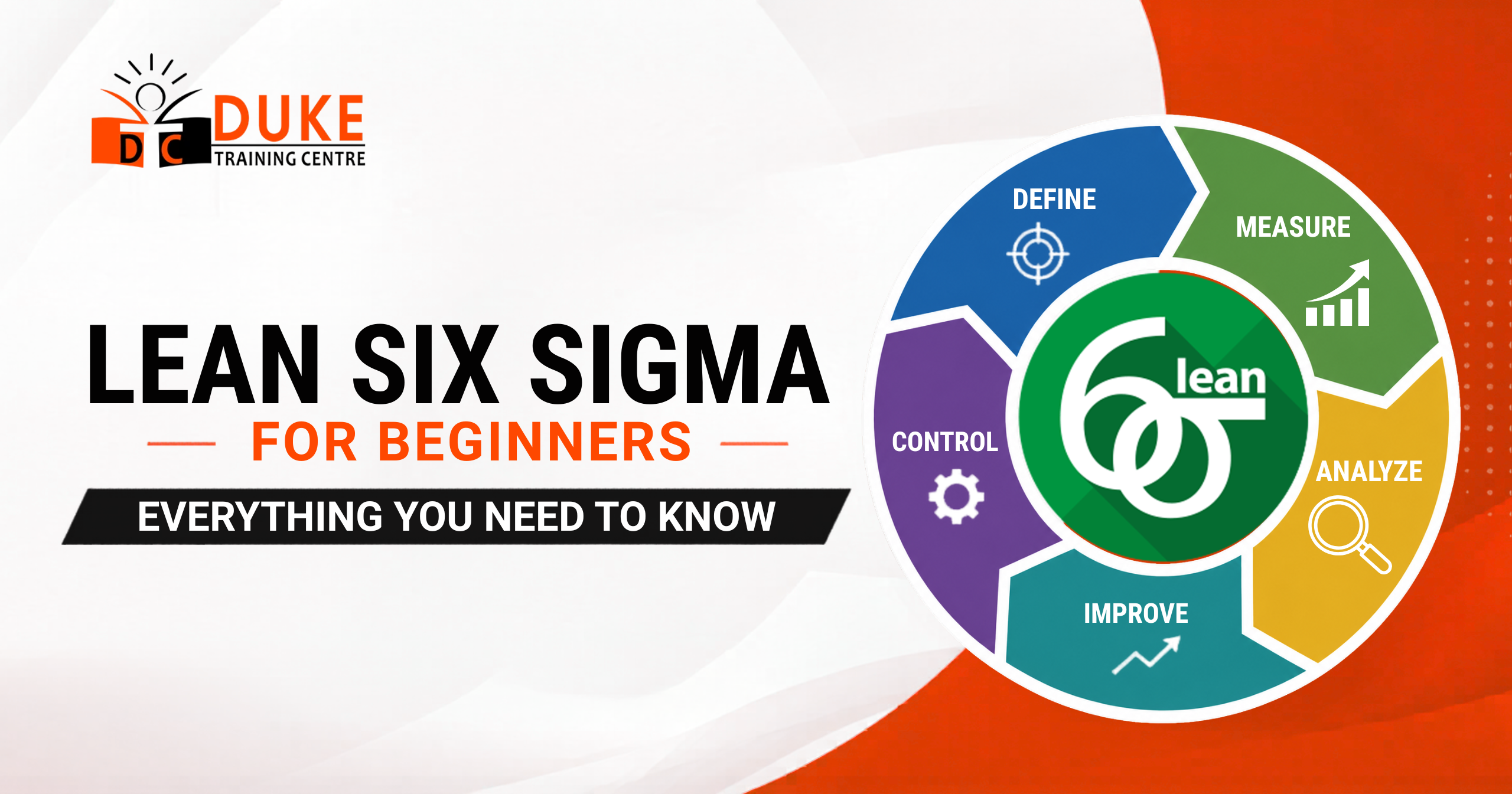
DMAIC is the core problem-solving framework used in Lean Six Sigma. It stands for Define, Measure, Analyze, Improve, and Control.
| DMAIC Stage | Meaning |
|---|---|
| Define | Identify the problem and project goal |
| Measure | Collect data and understand current performance |
| Analyze | Find the root cause of the problem |
| Improve | Implement solutions |
| Control | Maintain the improved process |
DMAIC helps professionals solve business problems in a structured and measurable way. This is one of the most important concepts taught in Lean Six Sigma training.
Industries Using Lean Six Sigma in UAE
Lean Six Sigma is widely used across UAE industries because organizations want better productivity, lower costs, improved quality, and smoother operations.
Major Industries Using Lean Six Sigma:
- Manufacturing
- Healthcare
- Construction
- Logistics and supply chain
- Aviation
- Banking and finance
- IT services
- Oil and gas
- Hospitality
- Retail and e-commerce
Because Lean Six Sigma is relevant across many sectors, certified professionals can explore different career paths depending on their background and interests.
Career Opportunities After Lean Six Sigma Certification
Lean Six Sigma certification can support career growth in roles related to operations, quality, process improvement, project coordination, and business excellence.
Popular Job Roles:
- Quality Analyst
- Operations Executive
- Process Improvement Specialist
- Project Coordinator
- Business Process Analyst
- Quality Assurance Executive
- Manufacturing Supervisor
- Operations Manager
- Continuous Improvement Executive
- Business Excellence Associate
Many UAE companies prefer professionals who understand process improvement, quality management, and operational excellence because these skills directly support business performance.
Lean Six Sigma Salary Scope in UAE
Salary depends on experience, industry, certification level, job role, and practical project knowledge. However, Lean Six Sigma-certified professionals often have better growth opportunities because they bring measurable business improvement skills.
Approximate Salary Range in UAE
| Certification Level | Approximate Salary Range |
|---|---|
| Yellow Belt | AED 5,000 – AED 8,000/month |
| Green Belt | AED 10,000 – AED 18,000/month |
| Black Belt | AED 20,000+/month |
Professionals with strong analytical skills, project experience, and leadership ability can earn higher packages over time.
How to Choose the Best Lean Six Sigma Training Institute in UAE
Choosing the right training institute is important because Lean Six Sigma is most valuable when you learn practical application, not just definitions.
Before Enrolling, Check These Factors:
- Industry-experienced trainers
- Practical case studies
- Real-world project examples
- Flexible online and classroom batches
- Recognized certification
- Clear explanation of belt levels
- Student support
- Career guidance
- Positive reviews
- Practical focus on DMAIC and process improvement tools
A good institute should help you understand how Lean Six Sigma is applied in real business situations.
Why Choose Lean Six Sigma Certification in UAE?
The UAE has strong demand for skilled professionals in operations, logistics, healthcare, construction, aviation, manufacturing, IT, and business services. As companies focus more on efficiency and quality, Lean Six Sigma-certified professionals can stand out in competitive job markets.
A Lean Six Sigma certification can help you:
- Build a stronger resume
- Improve job readiness
- Learn practical business tools
- Understand quality and process improvement
- Prepare for operations and management roles
- Grow in UAE’s competitive professional environment
For beginners, this certification can be a smart first step toward a career in quality management, operations, project coordination, or business improvement.
Final Thoughts
Lean Six Sigma is one of the most useful certifications for beginners who want to build skills in quality management, process improvement, operational excellence, and problem-solving. It helps professionals understand how businesses can reduce waste, improve performance, and make better decisions using data.
For students, freshers, and working professionals in the UAE, Lean Six Sigma training can open career opportunities across industries such as manufacturing, logistics, healthcare, construction, aviation, finance, IT, and oil and gas.
If you are new to Lean Six Sigma, start with White Belt or Yellow Belt. If you already have work experience and want stronger career growth, Green Belt can be a valuable next step.
Ready to start your Lean Six Sigma journey? Explore our Lean Six Sigma certification training in UAE and choose the right belt level for your career goals.
FAQs on Lean Six Sigma for Beginners
1. Is Lean Six Sigma difficult for beginners?
No, Lean Six Sigma is not difficult for beginners if you start with White Belt or Yellow Belt certification. These levels explain the basic concepts of process improvement, waste reduction, quality management, and DMAIC in a simple way.
2. Which Lean Six Sigma belt should I start with?
If you are completely new, start with White Belt. If you want practical knowledge and career value, Yellow Belt is a better option. Working professionals can also consider Green Belt if they already have some business or operations experience.
3. Is Lean Six Sigma certification worth it in UAE?
Yes, Lean Six Sigma certification is valuable in the UAE because many industries focus on efficiency, quality, customer satisfaction, and operational excellence. It can support career growth in operations, quality, logistics, healthcare, construction, aviation, and IT.
4. Can non-technical professionals learn Lean Six Sigma?
Yes, non-technical professionals can learn Lean Six Sigma. It is useful for people from management, healthcare, finance, administration, logistics, customer service, and operations because it focuses on improving processes and solving business problems.
5. What is the duration of Lean Six Sigma training?
The duration depends on the belt level. White Belt may take 1 to 3 days, Yellow Belt may take 1 to 2 weeks, Green Belt may take 4 to 8 weeks, and Black Belt may take 2 to 4 months.
6. Does Lean Six Sigma improve salary opportunities?
Yes, Lean Six Sigma certification can improve salary opportunities, especially when combined with work experience and practical project knowledge. Green Belt and Black Belt professionals often have better chances for higher-paying quality, operations, and process improvement roles.
7. Is Lean Six Sigma only for manufacturing?
No, Lean Six Sigma is not only for manufacturing. It is used in healthcare, logistics, aviation, construction, banking, IT, oil and gas, hospitality, retail, and many service-based industries.
8. What is the difference between Lean and Six Sigma?
Lean focuses on removing waste and improving speed, while Six Sigma focuses on reducing errors and improving consistency. Lean Six Sigma combines both methods to improve quality, efficiency, and business performance.